
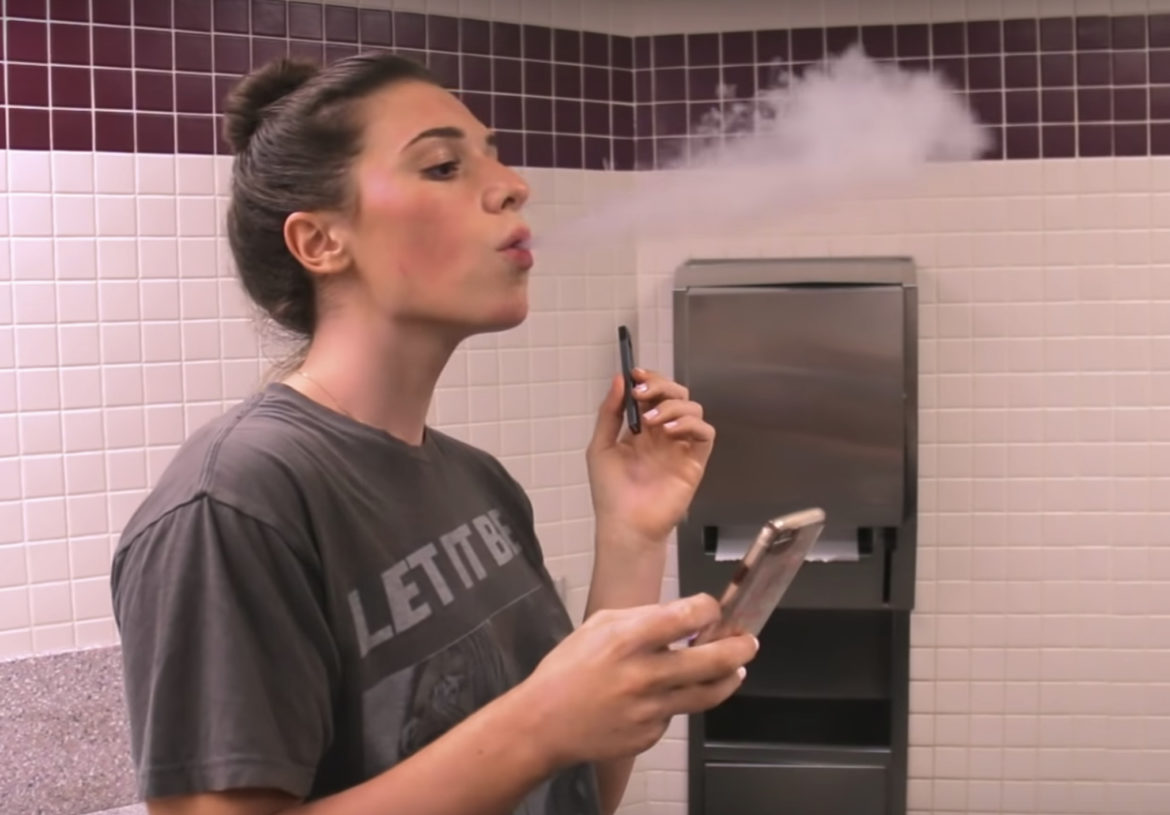
Every three minutes in American schools, a nefarious issue is exposed One student has been discovered to be vaping. Public health professionals label teens who vape as a complete epidemic. According to the CDC there are more than 40% of high school students and 80% of middle schoolers who have tried e-cigarettes. Nearly all (99 percent) of them contain nicotine, an addictive chemical which changes the wiring of brains in developing children and frequently serves as a gateway to cigarette smoking. Parents, educators, and administrators face mounting pressure to take action. The vape detector is a sophisticated tool rapidly becoming a must for campuses across the country. Triton, as well as 3D Sense are the two the most advanced vape detectors schools can make use of. They can do more than just emit an alarm.
How Vape Detectors Work: Precision Without Intrusion
A modern vape smoke detector like the Triton ULTRA Smart Safety Sensor doesn’t rely on cameras or audio recordings ensuring 100% privacy compliance while still delivering actionable intelligence. It uses particulate sensors that analyze the air in real-time. The device sends alerts to staff via email or text when vape aerosols, or masking agents such as strong perfumes are detected. False positives are very low, giving administrators confidence that any notification will receive immediate attention.
The price of installation can be reduced if one device covers the entire space. Triton clients typically experience a drop in vaping within five weeks. The reason? Data-driven deterrence. The Triton Cloud Dashboard highlights “hotspots”, where vaping is the most prevalent and at what times. This enables principals to guide hall monitors as well as security personnel where they are needed.
Beyond Detection, Occupancy Visibility and Loitering control
What is what sets Triton in a different way from standard vape detectors is its patent-pending occupancy display technology. While not capturing sound or images or recording sound, the ULTRA sensor tracks people count and the time they spend in sensitive zones. Administrators can see the heat maps using colors that indicate when bathrooms become social spaces, the most popular places for smoking e-cigarettes, as well as prolonged close contact which spreads respiratory illnesses.
Stanford Medicine research underscores the dangers of vaping: students who use the drug are five times more likely contract COVID-19. Through reducing congregation smoking, vape detectors in schools help improve air quality and reduce risk of transmission for all airborne pathogens. After the pandemic, this double effect has pushed these devices from a mere option to mandatory.
Transforming data into discipline and dialogue
Numbers tell an interesting story. The reports module of Triton provides quantitative evidence of incident timingstamps and the locations. It also provides trends in frequency. Schools can provide this information to school boards, parents ‘ groups or even to students. If a campus exhibits an increase of 60% in detections after the introduction of detectors, skepticism fades. Parents will be able to see that the students are focused; they are also aware of the implications.
The educators can improve the effectiveness of their message by announcing that smoke detectors for vapes are readily available from the beginning. 3D Sense, for example is advertised as a preventative. “Let students know that the air itself is watching,” guidance materials advise. The next step: The social costs caused by triggering alarms often proves to be greater than a lecture.
A Multi-Front Strategy Schools Can’t Ignore
Vape detectors are not the only method to stop vaping. They are part of a comprehensive strategy.
Monitoring Alerts that are real-time capture events as they happen.
Education: Evidence-based studies fuel anti-vaping curricula.
Deterrence – Visible signage and known consequences shift behavior.
Discipline – Hotspot data justifies targeted enforcement.
Support – Schools pair detections with cessation tools for students who are struggling.
The CDC emphasizes that reversing this trend is a matter of “buy-in” from educators, parents and society. Vape detectors are an important missing piece of the puzzle – an immediate, objective feedback system that converts good intentions into quantifiable results.
Simple Installation
Triton Cloud Dashboard allows you to add devices to your account in just a few minutes. Administrators can add contacts, set alert thresholds, as well as customize notification rules. One demo shows how easy it is. It allows users to schedule one-on-one time to see live hotspot maps and historical graphs in the action.
Conclusion
Every puff missed could cause a lifetime dependency. Every undetected bathroom gathering risks both health and safety. Vape detectors in schools such as Triton and 3D Sense offer more than surveillance. They provide intelligence, deterrence, as well as evidence of the progress. Campuses which install them do not just react to the vaping crises; they control it.
These tools can turn naive fears into concrete victories. With just one sensor for each room, and a information about occupancy privacy that can help transform naive concerns into concrete victories. It’s not a good idea to wait in this day and age, where 40% of high schoolers have already tried it out and the proportion of middle schoolers are growing every day. You’ll be the first person to learn what the culture of your school is saying.